I still remember one of the biggest mistakes I made when I was a new trader. I had identified what looked like the perfect setup on EUR/USD. The trend was strong, my indicators all pointed to a buy, and I felt confident enough to enter the trade. Instead of practicing risk management, I traded with bigger lots. Just a few minutes later, the market suddenly reversed. Within moments, my stop loss was hit. Confused and frustrated, I asked myself, "What just happened?" It wasn't until later that I realized the US Federal Reserve was about to announce its interest rate decision.
The market wasn't reacting to my technical indicators; it was reacting to new economic information. The world's largest banks, hedge funds, institutions, and professional traders were adjusting their positions based on expectations about the US economy. That experience completely changed the way I looked at the financial markets. I learned that charts tell us what the market is doing, but economics often explains why it's doing it. If you've ever wondered why the Euro rises against the US Dollar, why the Japanese Yen suddenly strengthens during times of uncertainty, or why the Singaporean Dollar weakens against major currencies, the answer lies in economics. Unlike stocks, where prices are often driven by a company's earnings, currencies are influenced by the economic health and financial outlook of entire countries.
In our previous lesson, we learned how currency prices are determined through the global interbank market. We discovered that exchange rates are created by the continuous buying and selling of currencies among major banks, liquidity providers, and other financial institutions. But understanding how prices are created is only half the story. The next question every trader should ask is: Why do currency prices move?
Why does the U.S. Dollar strengthen against the Japanese Yen one week, only to weaken the next? Why can a single speech from a central bank governor cause the market to move hundreds of pips in just a few hours? The answer lies in the economic forces that influence supply and demand. Every day, investors, businesses, governments, and banks make decisions based on economic conditions, and those decisions ultimately determine whether a currency becomes stronger or weaker. Let's explore the six major forces that drive the Forex market.
1. Interest Rates: The Most Powerful Driver of Currency Prices
If there's one factor every Forex trader should pay attention to, it's interest rates.
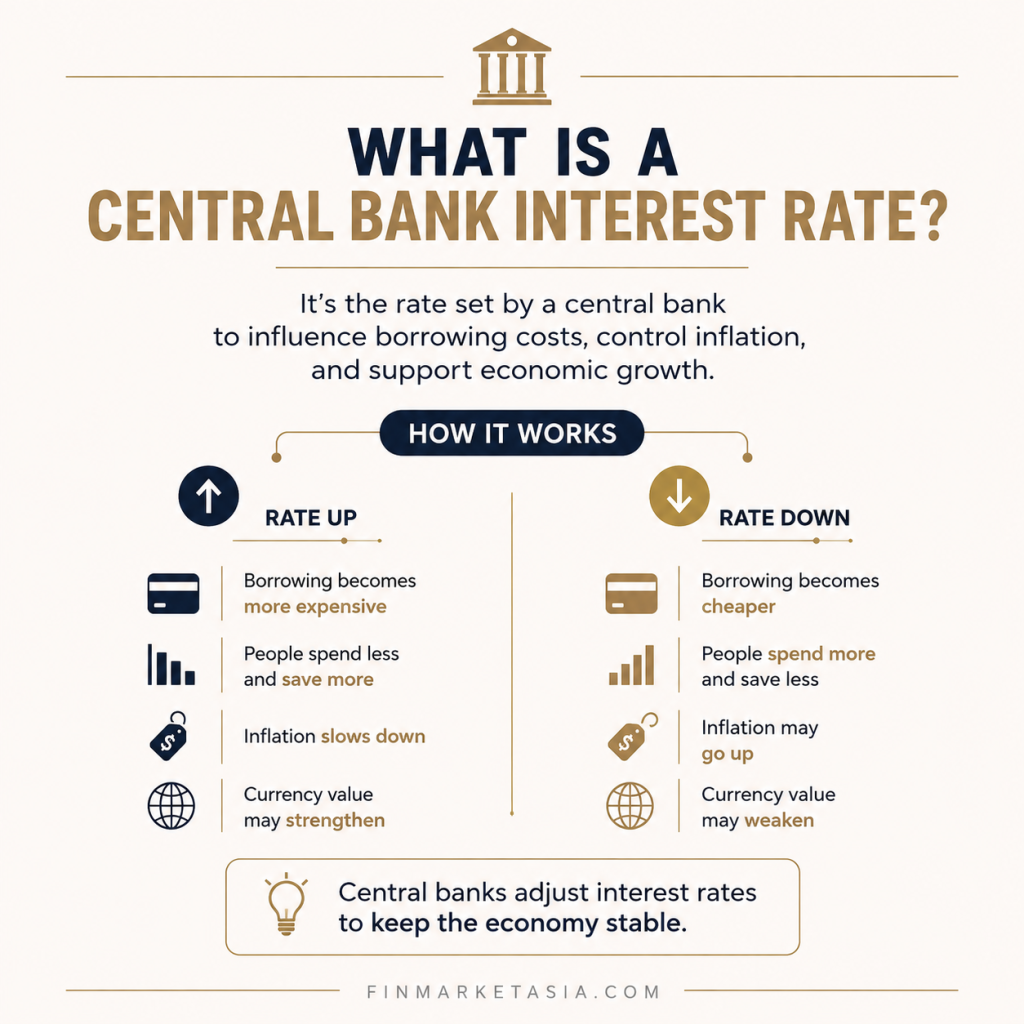
Interest rates are one of the most powerful influences on exchange rates. When a country's central bank raises interest rates, financial assets denominated in that currency generally become more attractive because investors can potentially earn higher returns. As international investors move money into that country, demand for its currency increases, often causing its value to appreciate.
For example:
If the US Federal Reserve raises interest rates while the European Central Bank keeps rates unchanged, investors may prefer US Dollar investments. Increased demand for US Dollars can push USD higher against the Euro, causing EUR/USD to decline. On the other hand, lower interest rates usually reduce foreign investment demand, which may weaken a currency.
Trading Tip:
Interest rate decisions are among the biggest market-moving events. Currency pairs often experience increased volatility before and after central bank announcements.
2. Inflation: Consumer Price Index (CPI)
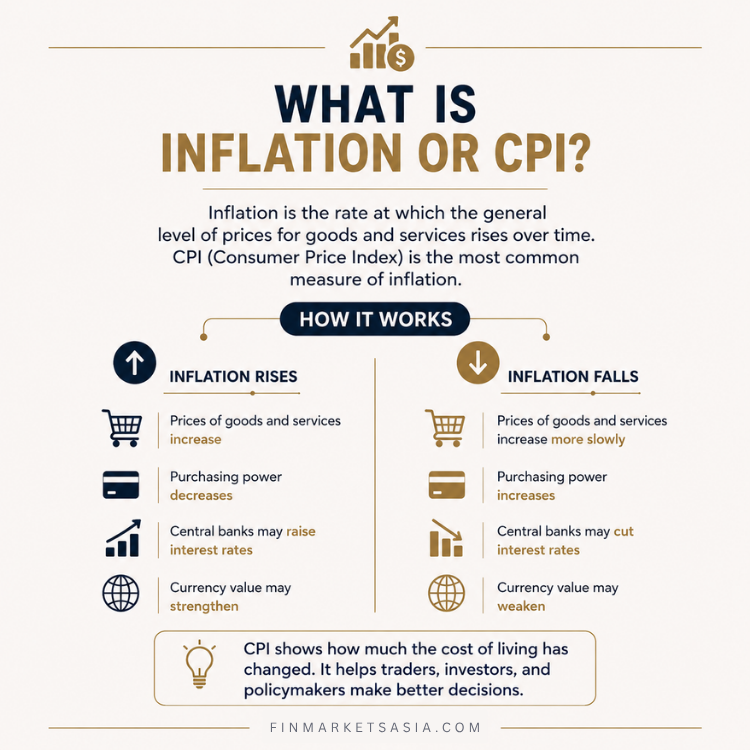
The Consumer Price Index (CPI) measures the average change over time in the prices paid by consumers for a basket of goods and services. Because it is the primary indicator of inflation, CPI releases are among the most volatile, high-impact events on the forex economic calendar. When CPI comes out higher than forecasted, traders rush to buy the currency in anticipation of higher interest rates. When CPI comes out lower than forecasted, traders sell because interest rate hikes become less likely.
Why CPI Moves Currency Prices?
1. Purchasing Power vs. Rate Hikes: Theoretically, high CPI indicates rising prices that erode a currency's purchasing power, which should make it weaker long-term.
2. The Forex Market Reality: In active trading, the central bank's reaction matters far more than purchasing power erosion. High CPI signals to traders that the central bank will likely raise interest rates to cool the economy.
3. Yield Attraction: Higher interest rates offer investors better returns on assets denominated in that currency. This drives foreign capital into the country, increasing demand for the currency and pushing its value up.
3. Economic Growth: GDP & Job Growth
Economic growth is a fundamental driver of currency value in forex trading, with Gross Domestic Product (GDP) and the employment rate serving as its core indicators.
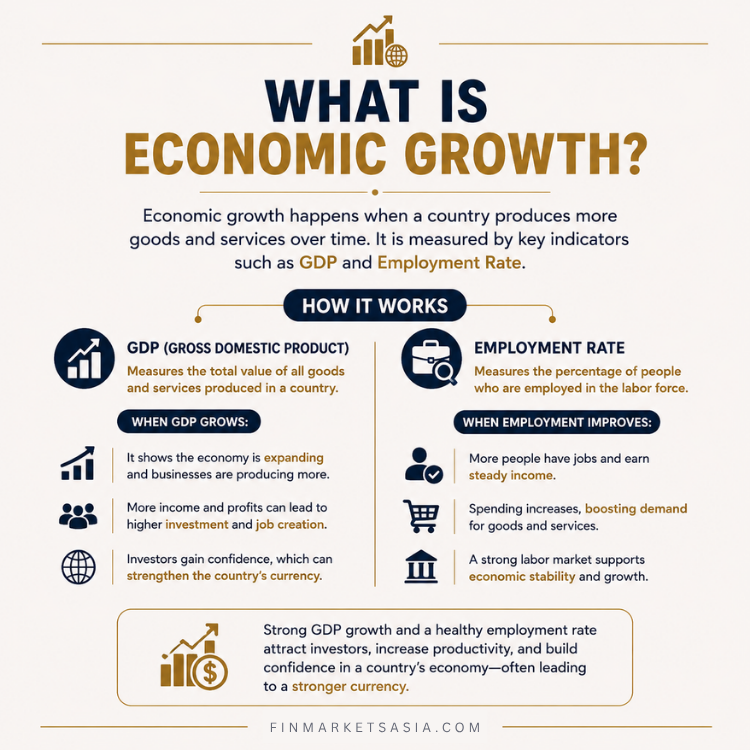
GDP measures the total economic output of a nation. Strong GDP growth signals a thriving economy where businesses expand and consumer spending rises. To keep the economy from overheating, central banks often respond to robust GDP with higher interest rates, attracting foreign investors and driving the currency’s value upward. Hand-in-hand with GDP is the employment rate. Low unemployment and strong job creation such as high US Non-Farm Payroll (NFP) figures indicate a healthy labor market.
Employed consumers spend more, further boosting GDP and reinforcing economic strength. For forex traders, positive GDP reports and high employment rates create a bullish outlook for a currency, while shrinking GDP and rising unemployment signal economic contraction, leading traders to sell the weakening currency.
4. Market Sentiment: Overall confidence or fear of investors.
Market sentiment is the overall confidence or fear of investors toward a country's economy and financial markets.
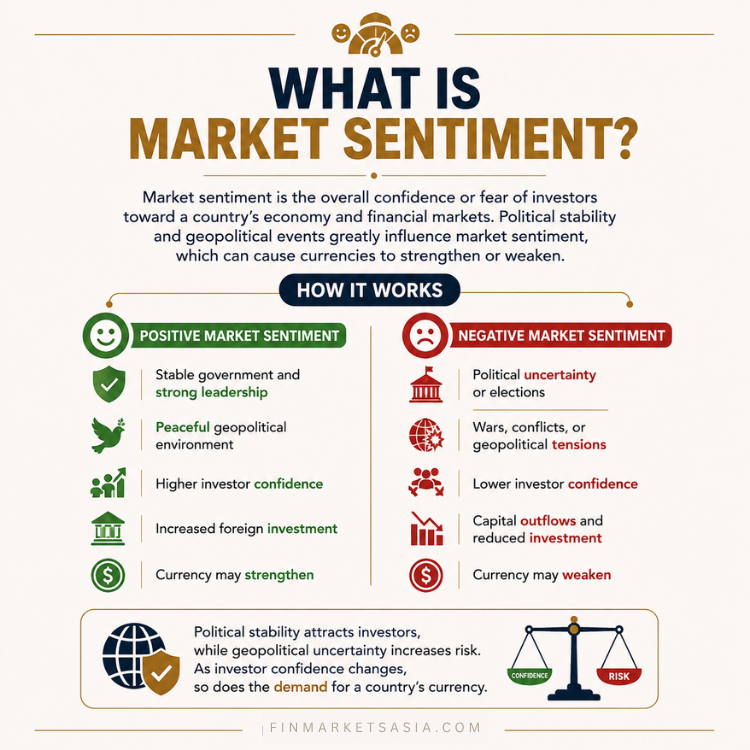
Investors and institutions seek stability for their capital. Countries with stable governments, clear regulatory frameworks, and peaceful political transitions foster strong investor confidence. This steady environment attracts foreign direct investment and capital inflows, increasing demand and causing the domestic currency to strengthen. Conversely, political uncertainty, such as contested elections, government collapses, or sudden policy overhauls, creates market fear. Unpredictability prompts investors to withdraw capital and shift funds into safer assets, driving down demand and causing the currency to weaken.
Geopolitical events like international trade wars, sanctions, or military conflicts trigger rapid market volatility. During severe crises, traders often abandon higher-risk currencies in favor of traditional "safe-haven" currencies like the US Dollar (USD), Swiss Franc (CHF), or Japanese Yen (JPY).Ultimately, forex traders closely track headlines, election results, and international relations alongside economic indicators to anticipate sudden capital flows and shield their portfolios from unexpected risk.
Final ThoughtsCurrency prices are constantly changing because of interest rates, inflation, economic growth, and market sentiment. These factors influence investor confidence and the flow of money between countries.
My advice: Don't just memorize economic news but understand how it affects the market. The better you understand these economic forces, the better you'll understand why currencies move and make more confident trading decisions.
Understand the economy, and you'll better understand the market.

Rich is the founder of FinMarkets Asia, where he serves as the Chief Editor and financial markets educator. With extensive experience in the trading industry, he has worked with several leading brokerage firms as a Market Analyst, Trading Educator, and professional trader. Throughout his career, Rich has been committed to empowering traders through high-quality financial education, in-depth market analysis, and practical trading insights. His mission is to help aspiring and experienced traders develop the knowledge, discipline, and confidence needed to navigate today’s global financial markets.