A personal note before we dive in.
I have a soft spot for stories like this one. There is something about a person starting with almost nothing, no big investors, no inherited fortune, just a trade he learned by inspecting other people's concrete, and turning that into one of the most recognizable names in Philippine business. When I first came across the story of David M. Consunji, I was not reading about a "conglomerate" or a "publicly listed holding firm." I was reading about a young engineer with a pickup truck and a promise he made to his aunt. That is the version of this story I want to tell you. So grab your coffee. This is the story of DMCI Holdings, told not as a stock ticker, but as a business built one honest project at a time.
Chapter 1: The Concrete Inspector Who Wanted More
Every good business story needs an origin, and this one starts in a small rented room in Pandacan, Manila, in 1954.
David Mendoza Consunji, later known simply as "DM" to friends and colleagues, had graduated with a civil engineering degree from the University of the Philippines in 1946. Before he became a businessman, he spent years working as a concrete inspector for a firm called Kuenzle and Streiff. It was not a glamorous role. It was the kind of job that teaches you, up close, what happens when construction cuts corners, and what real quality actually requires.
That hands on knowledge became his edge. On December 24, 1954, with only a few hundred pesos in capital, an old second hand cement mixer, and a new pickup truck, Consunji started his own contracting business under his own name. He called it D.M. Consunji, Incorporated, and everyone would soon simply call it DMCI.
He would later compare that cement mixer to a musical instrument, something he had learned to play with real skill. It is a small detail, but it says a lot about how he viewed his work. Construction was not just a paycheck to him. It was a craft to be mastered.
Chapter 2: Chicken Houses First, Skylines Later
Here is the part of the story I find most charming. DMCI's very first contracts were not skyscrapers or landmark towers. They were poultry houses, built for the government's Bureau of Animal Industry.
It sounds almost comical now, given where the company eventually landed. But that is exactly the point of the story. Consunji built those simple structures with the same discipline he would later bring to some of the country's most important buildings. He believed, and said openly, that a business should be rooted in service before profit. Doing work with honesty, he often explained, was the whole foundation of what his company stood for.
That kind of reliability spreads quickly by word of mouth. Manila was rebuilding after the war, and contractors who delivered on time and on quality were in high demand. Little by little, DMCI graduated from small government jobs to major public and private developments.
Over the following decades, the company's name became tied to some of the most recognizable structures in the country, including the Cultural Center of the Philippines, Ayala Tower One, the building that now houses the Philippine Stock Exchange, and the historic Manila Hotel. This was a company that quite literally helped shape the skyline of a nation.
Chapter 3: A Detour Into Public Service
In 1970, Consunji stepped away from full time business life to serve his country directly. President Ferdinand Marcos Sr. appointed him Secretary of the Department of Public Works, Transportation and Communications, a position he held until 1975.
It is a striking chapter in his life story, the builder becoming, for a period, the government official responsible for the nation's infrastructure. Even his critics respected his technical credibility.
Several years after leaving government, Consunji continued to receive recognition for his contributions to engineering. In 1979, he was named an Outstanding Citizen of the City of Manila, another recognition of the career he had built in the construction industry.

Chapter 4: One Company Becomes Many
By the 1990s, DMCI was no longer simply a construction firm. Across the decades, Consunji had built or acquired interests far beyond contracting alone, expanding into real estate development, mining, and power generation.
Rather than allow these ventures to operate as loose, disconnected pieces, Consunji made a defining choice. In 1995, he formed DMCI Holdings, Incorporated, a parent company designed to bring all of these businesses under a single structure. On December 18, 1995, DMCI Holdings was listed on the Philippine Stock Exchange, a step that opened up access to capital and growth that the old, privately owned DMCI never could have reached on its own.
Under the new holding company sat a family of businesses that included the following.
• D.M. Consunji, Incorporated, the original construction company, still very much active and building.
• DMCI Project Developers, Incorporated, later known as DMCI Homes, the real estate arm behind many of Metro Manila's residential condominium projects.
• Semirara Mining and Power Corporation, the country's largest coal producer.
• DMCI Power Corporation, focused on power generation, particularly in off grid areas.
• DMCI Mining Corporation, covering nickel and other mineral resources.
• DMCI MPIC Water Company, dedicated to water infrastructure and utility services.
What began as one man and a cement mixer had grown into a genuinely diversified conglomerate spanning construction, real estate, energy, mining, and utilities, all tracing back to that small rented office in Pandacan.
Chapter 5: The Philosophy Behind the Growth
What stands out about DMCI Holdings as it grew into one of the Philippines' major business groups is how much of its success was built around discipline and efficiency. Even as the company expanded and managed billions of pesos in assets, its leadership remained relatively lean. This reflected David M. Consunji's practical approach to business. He believed in keeping things simple, avoiding unnecessary expenses, and focusing on getting the job done properly.
Consunji was also known for living modestly despite his growing wealth. His success did not appear to be driven simply by the desire to accumulate more money or show off his fortune. Instead, he placed value on hard work, discipline, and the satisfaction that comes from completing a project properly.
That philosophy became part of the culture associated with the Consunji businesses. Whether in construction, property development, mining, power, or infrastructure, the focus remained on building businesses that could perform over the long term.
For Consunji, success was not about making a quick profit. It was about building something that could last. That simple mindset helped shape DMCI's growth and eventually turned a construction company into one of the country's most recognizable business groups.

Chapter 6: Passing the Torch
In 2014, Consunji stepped back from day to day operations and handed leadership to his son, Isidro "Sid" A. Consunji, who took over as chairman and president of DMCI Holdings and later of Semirara Mining as well. David remained connected to the company in an honorary role as chairman emeritus.
David M. Consunji passed away on September 4, 2017, at the age of ninety five. By then, he had been counted among the wealthiest individuals in the Philippines, and DMCI Holdings had grown into a company valued in the hundreds of billions of pesos. Still, the numbers were never really the point of the story. The real story was a promise kept, one he had made decades earlier, to build with honesty and integrity.
Chapter 7: The Legacy Today
Today, DMCI Holdings stands as one of the Philippines' major diversified business groups, with interests spanning construction, real estate through DMCI Homes, energy, water, and mining. But behind the billions of pesos in assets and its long list of businesses is a story that started much more simply.
It began with a young concrete inspector who decided to take a chance and build a company of his own. David M. Consunji started with limited resources, but he had something that would prove to be far more valuable: experience, determination, and the confidence to believe that he could do things better.
The journey did not happen overnight. It was built project by project, contract by contract, and decision by decision. There were years of hard work behind every milestone, with each completed project helping lay the foundation for something much bigger.
The story of DMCI is therefore more than the story of a successful conglomerate. It is also a reminder that some of the biggest businesses can begin with a simple decision to take a risk and start building.Sometimes, building something great starts with nothing more than the courage to believe that you can build it yourself.
Closing Thoughts
What draws me to stories like this one is not the size of the fortune at the end. It is the starting point. A pickup truck. A worn cement mixer. A handful of pesos. A promise made to an aunt about honesty in business.
It is a good reminder that most large companies did not start out large. They started with one person deciding to do good work, consistently, and letting the reputation grow from there, quite literally, one building at a time.
If you happen to be building something of your own right now, however small it feels today, maybe that is the real takeaway from the DMCI story. The size of your starting capital matters far less than the integrity you bring to your very first job.
___________
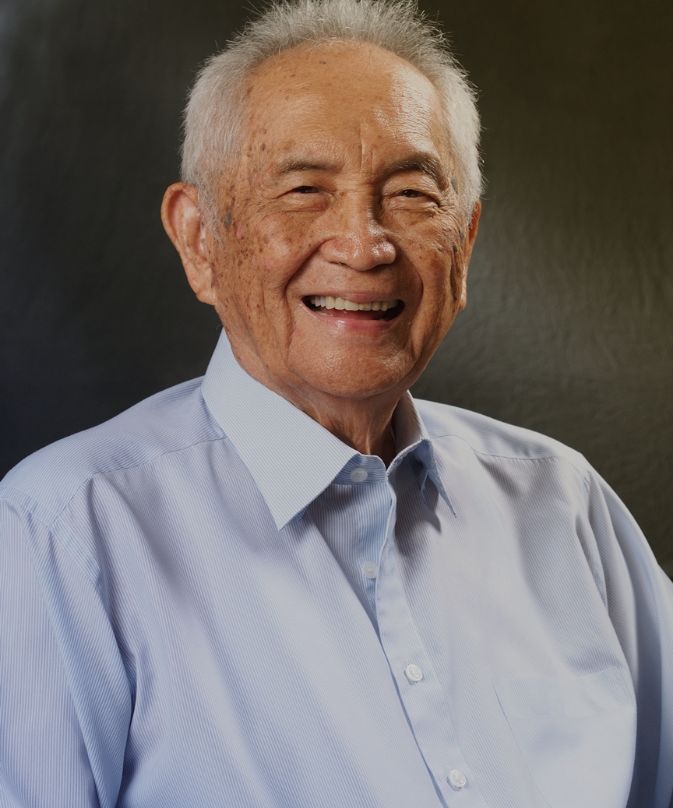
Content for this piece is derived from public records on David M. Consunji and DMCI Holdings, including company history and media reports. The portrait of Mr. Consunji is sourced directly from the DMCI Holdings website.

Rich is the founder of FinMarkets Asia, where he serves as the Chief Editor and financial markets educator. With extensive experience in the trading industry, he has worked with several leading brokerage firms as a Market Analyst, Trading Educator, and professional trader. Throughout his career, Rich has been committed to empowering traders through high-quality financial education, in-depth market analysis, and practical trading insights. His mission is to help aspiring and experienced traders develop the knowledge, discipline, and confidence needed to navigate today’s global financial markets.