If someone had asked me what a CFD was before June 2012, I honestly wouldn't have known the answer. Like many people, I thought investing meant buying stocks, owning gold, or purchasing real estate. The idea of trading the price movements of financial markets without actually owning the asset sounded strange to me.
Everything changed in June 2012. That was the month I joined iFOREX as a Retention Specialist and a Trader. Little did I know that this opportunity would introduce me to an entirely new world; one that would eventually become my career for more than a decade. Looking back today, I realize I wasn't just starting a new job. I was beginning a lifelong journey of learning about the global financial markets.
My First Days in the Industry
When I entered the CFD industry, everything seemed overwhelming. There were charts moving every second. Currencies were rising and falling. Gold prices reacted to economic news. Oil prices changed because of geopolitical events. The U.S. dollar strengthened or weakened depending on central bank decisions. There were so many financial terms that I had never heard before.
Forex.
Leverage.
Margin.
Stop Loss.
Take Profit.
Contracts for Difference.
At first, I felt intimidated. As both a Retention Specialist and a trader, I wasn't only expected to understand these concepts. I also had to explain them to clients in a simple and confident way. That forced me to study every single day. The more I learned, the more I realized that CFD trading wasn't gambling. It was about understanding how financial markets work and making informed decisions based on analysis and risk management.
So, What is CFD Trading?
CFD stands for Contract for Difference. A CFD is a financial contract between you and your broker. Instead of buying the actual asset, you simply trade the difference in its price between the moment you open a trade and the moment you close it. In simple terms, you're trading price movements, not ownership.
For example, if you trade Gold through CFDs, you don't receive physical gold bars. If you trade Apple shares through CFDs, you don't become a shareholder of Apple. Instead, you speculate on whether the price will rise or fall. If your prediction is correct, your trade may generate a profit. If you're wrong, the trade results in a loss. It really is that straightforward.
The Lesson That Changed My Perspective
One of the first things I learned was that markets don't only go up. Before entering the industry, I believed the only way to make money was to buy something cheaply and sell it later at a higher price. Then one of my colleagues asked me a question I'll never forget. "What if you think the market is going down?" That single question introduced me to one of the biggest advantages of CFD trading.
With CFDs, you can potentially profit from both rising and falling markets. If you believe the price will increase, you open a Buy position. If you believe the price will decrease, you open a Sell position. That flexibility is one reason why millions of traders around the world choose CFDs.
A Simple Example:
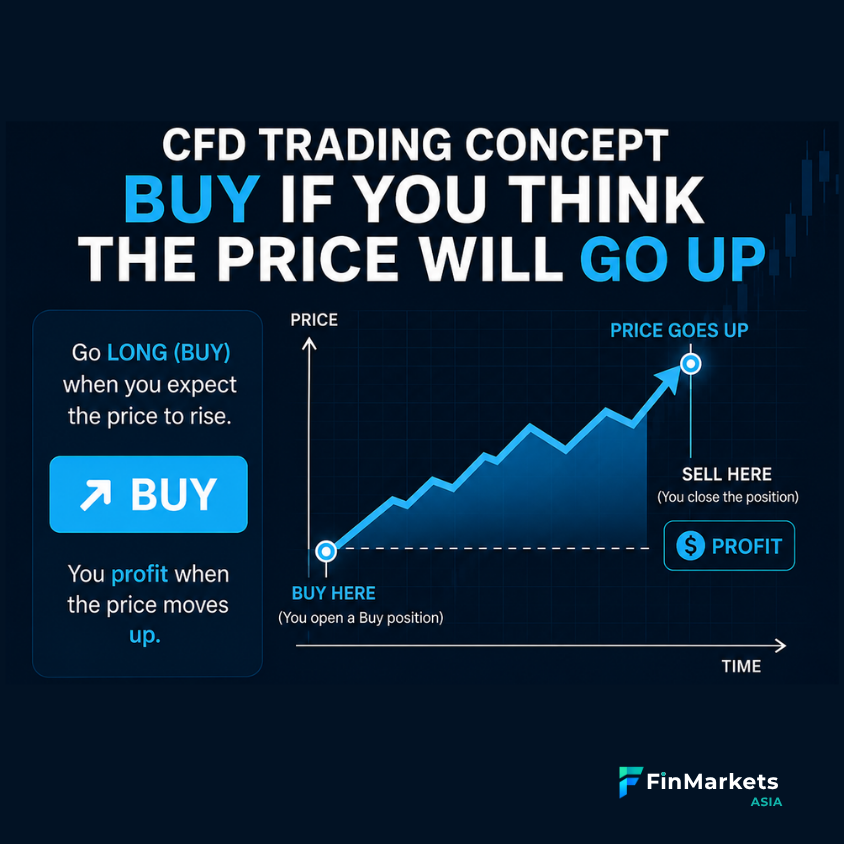
Go LONG (BUY)
Imagine Gold is trading at $3,400 per ounce. After analyzing the market, you believe prices will rise. You open a Buy trade. A few hours later, Gold reaches $3,420. Since the price moved in your favor, your position earns a profit.
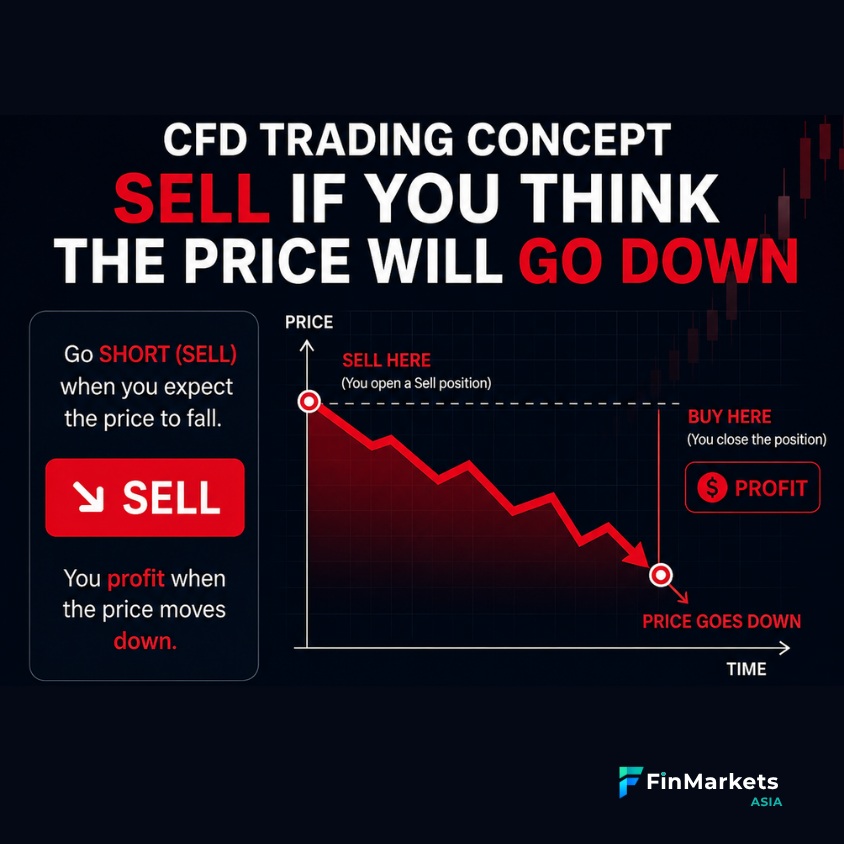
Go SHORT (SELL)
Now imagine the opposite. Economic data is stronger than expected, and you believe Gold may decline. Instead of buying, you open a Sell position. Gold falls from $3,400 to $3,380. Once again, your prediction was correct, and the trade becomes profitable.
This ability to trade in both directions is one of the defining features of CFD trading.
The Markets Never Sleep
Working in the brokerage industry also opened my eyes to how interconnected the world really is. A speech from the U.S. Federal Reserve could move Gold prices. An inflation report from Europe could influence the Euro. Political uncertainty could affect Oil. A strong company earnings report could send stock prices higher. I realized that trading wasn't just about charts. It was about understanding economics, business, politics, psychology, and global events. Every headline had the potential to move the markets.
The Biggest Mistake Beginners Make
Like many beginners, I was fascinated by leverage. The idea of controlling a larger position with a relatively small amount of capital sounded exciting. But I quickly learned that leverage works both ways. While it can magnify profits, it can also magnify losses. Over the years, I've seen many traders focus entirely on making money while ignoring risk management. Unfortunately, the market has a way of teaching expensive lessons. Today, if someone asks me what the most important trading skill is, my answer isn't technical analysis. It isn't fundamental analysis. It isn't finding the perfect indicator. It's risk management. Professional traders survive because they protect their capital. Without capital, there are no future opportunities.
My Advice to Every Beginner
If you're just beginning your CFD trading journey, don't rush. Learn the basics first. Understand how financial markets move. Practice using a demo account before risking real money. Develop a trading plan. Use Stop Loss orders. Accept that losses are part of trading. Most importantly, never stop learning. Even after more than a decade in the CFD industry, I still study the markets every day. Financial markets constantly evolve, and successful traders evolve with them.
Final Thoughts
When I joined iForex in June 2012, I thought I was simply starting a new career. I never imagined that it would shape my future for years to come. That experience introduced me to CFD trading, but more importantly, it taught me discipline, patience, continuous learning, and respect for financial markets. Today, whenever someone asks me, "What is CFD trading?" I don't immediately start with technical definitions. Instead, I tell them this: CFD trading is not about getting rich overnight. It's about understanding how the world's financial markets work, managing risk responsibly, and making informed decisions based on knowledge rather than emotion.

The markets will always offer opportunities. The challenge is preparing yourself well enough to recognize them and disciplined enough to manage the risks that come with them.
➡ [Lesson 1.2 – How Are Currency Prices Determined? Understanding the Forex Market]
One of the biggest misconceptions beginners have is that brokers decide whether a currency goes up or down. They don't.
Risk Warning: Trading Forex and Contracts for Difference (CFDs) involves substantial risk and may not be suitable for all investors. CFDs are leveraged products, which means both profits and losses can be magnified. This lesson is provided for educational purposes only and should not be considered financial or investment advice.

Rich is the founder of FinMarkets Asia, where he serves as the Chief Editor and financial markets educator. With extensive experience in the trading industry, he has worked with several leading brokerage firms as a Market Analyst, Trading Educator, and professional trader. Throughout his career, Rich has been committed to empowering traders through high-quality financial education, in-depth market analysis, and practical trading insights. His mission is to help aspiring and experienced traders develop the knowledge, discipline, and confidence needed to navigate today’s global financial markets.